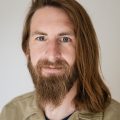
A guiding question throughout my first six months as a photojournalist covering this community has been “What makes Waco Waco?” My job has let me view a cross-section of life, and I’ve concluded that Waco is many overlapping things at once. It has been a privilege to witness an era in Waco when the community is acknowledging its past while shaping its future for decades to come. Many thanks to those who have let me into their homes, shared their stories, and reluctantly responded to my last-minute requests of “Hey, are you available between now and the end of the day to take some photos for a story that runs in the morning?”
Here are some of the photos in 2025 that have stuck with me long past publication, along with some reflections on my experiences behind the camera and how I’m coming to understand Waco.

I’ve always been drawn to bodies of water as a place of adventure and reflection. Two of my first priorities in Waco were to kayak the Brazos and to go swimming, leaving me with the question, “Do people also swim in the river here?” After a couple of months a post came across my Facebook feed advertising a night paddle with Sunshine Paddle Adventures. What better way to experience the Brazos than a quiet, relaxing float down the river?
But even before we embarked on our journey from the Franklin Avenue bridge, I noticed the river was busier than usual with motorboats. We launched downstream under the sunset glow and found ourselves near McLane Stadium, immersed in the rumble of red-dirt country bands and some 35,000 fans attending the “Boys from Oklahoma Texas Encore” show.
There we witnessed a show of another kind: Kids somersaulting and backflipping into the water while boaters swam in the Brazos, beers in hand. I knew I had to split off from my group and paddle over with my camera to capture this wild scene unfolding on the river. And I had my question answered.


October brought the busiest month of the year, building to the final week, when I was juggling multiple stories every day. When we learned that the government shutdown would halt funding to SNAP recipients starting in November, I put out a call for affected people who would be open to us photographing them in our homes. Centering people who are affected by policy decisions is important to me and the rest of the Bridge team.
Stefanie Wheat-Johnson invited me to photograph her family making dinner the night before our story was set to publish. I had already photographed three food pantries and the people working to meet the community’s food needs, but not anyone who would lose their benefits.
I arrived at the Wheat-Johnson house after shooting a series of assignments, and the family welcomed me to photograph every step of their evening dinner routine, even inviting me to join them at the table. I had to decline so I could run home and file the stories in time for publication.
This quiet moment between Stefanie and her daughter Elinor, stirring batter for brownies made from scratch, became the lead photo for the story, which The Texas Tribune picked up to run statewide. We could have easily run the story without the Wheat-Johnson family. But their willingness to let us feature them helped us move beyond the stereotypes of who struggles with food insecurity.


In late November, I was walking a rural road near Ross, asking everyone I saw: “Are you aware of a proposed data center going in right here in your backyard?” Only one knew, and she didn’t want to talk. I found others in the area who were concerned to hear about the project and wanted to keep in touch. We broke the news with Sam Shaw’s story on Nov. 21, and within a few weeks, neighbors were circulating petitions, holding meetings to organize against the project and showing up to protest at the Lacy Lakeview City Council meeting.
We rapidly built trust among the community, elected officials and project representatives by getting the facts straight, listening to concerns and trying to answer questions as quickly as possible. At one meeting, some of the organizers even recognized our staff and drew a round of applause for the work we had done. It felt good as a new journalist in Waco to sense that we had earned trust as a source of useful information in an important community debate. It reinforced my belief that making photos and stories by and for the community I live in is what’s important and will help guide my photojournalism going into 2026.

Pardon my confusion when I began hearing about a polka festival in West, Texas. I had spent the previous seven years in El Paso and had never heard about the polka scene. Soon I realized that West-comma-Texas is its own spot on the state’s cultural map with its own Czech history, polka and kolaches included.
When I think of polka, I think fondly of my grandpa watching Lawrence Welk in the evenings and Pennsylvania fire halls filled with retirees. Instead, I found myself on the dance floor with hundreds of teens and young adults whirling to the high-energy “nuclear polka” of Denton-based Brave Combo. realized this was one of the most Texan moments of my life, and I couldn’t wait to do it again next year.